Walk into most healthcare or corporate HR departments in 2026 and you'll find the same thing: a wellness stipend, a meditation app subscription, maybe a step count challenge with a leaderboard. Engagement dashboards showing usage numbers leadership can point to in a board deck.
And still, the exit interviews say the same thing they said five years ago.
This is the disconnect worth naming plainly: wellness perks and organizational wellbeing are not the same thing, and treating them as interchangeable is why so much of this spend produces so little retention.
A meditation app can help someone manage stress that's already been created by a broken handoff process, chronic understaffing, or a manager who never says thank you. It cannot fix the thing that's creating stress in the first place. That distinction — coping tool versus root cause — is the one most wellness budgets never actually confront.
I've seen this from both sides, even in the humanitarian sector. As a medical advisor, I've watched colleagues burn out from the moral weight of decisions made without adequate support, and from systems that treated their exhaustion as a personal failing rather than a structural one. As an executive, I've sat in budget meetings where "wellbeing" gets a line item, but the actual drivers — workload distribution, psychological safety, whether people feel heard — never make it onto the agenda at all.
The research for 2026 backs this up. The trend isn't toward more apps; it's toward organizational design fixes — workload audits, manager training on psychological safety, structural changes to how decisions get made and how burnout risk gets flagged before it becomes a resignation. The companies getting this right are the ones treating wellbeing as an operating question, not a benefits question.
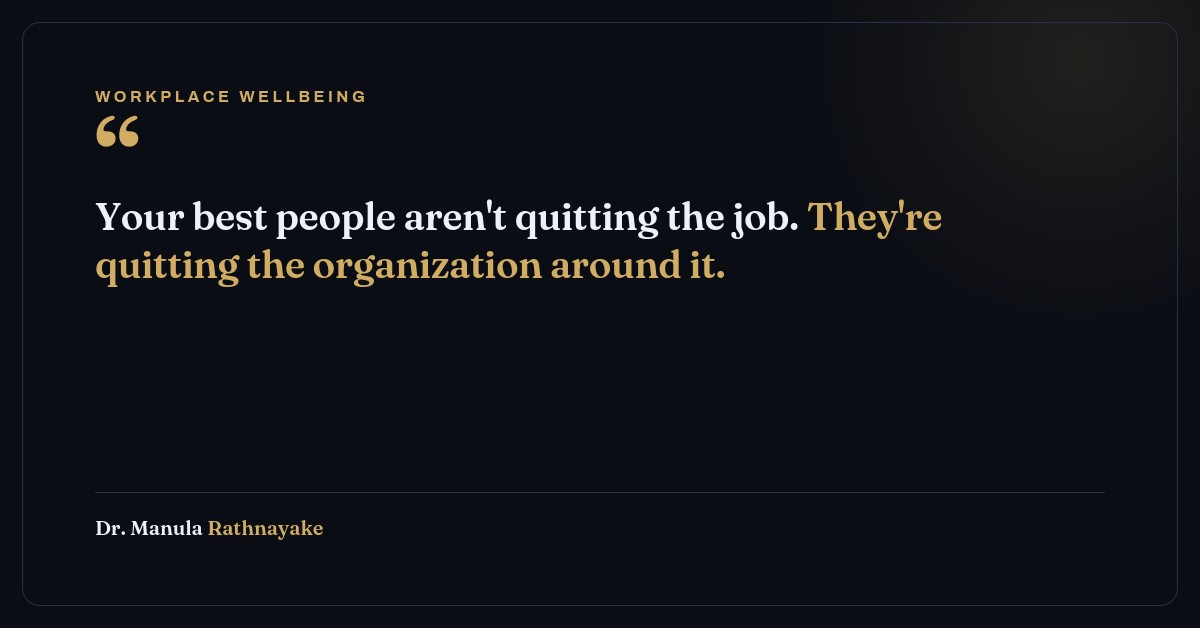
Here's the uncomfortable part for leadership: if your best people are still leaving, the problem was never that they didn't have enough wellness resources. It's that the organization around them was the thing making them unwell — and no app was ever going to fix that.
The real work is redesigning how people actually work, not subsidizing how they cope with how people actually work.